
The Language of Clothes | The Fashion Calendar | Ruth Finley
You wear clothes.
But do you know how the fashion industry decides what to launch, when to launch it, and why you see summer clothes on a runway when it’s barely autumn?
Because fashion doesn’t run on weather. It runs on a calendar most of us never see.
And understanding this invisible system is one of the best ways to understand how the fashion industry thinks, works, and communicates.
The Godmother of New York Fashion’s Calendar
This story doesn’t begin with Chanel, Dior, or Vogue.
It begins with a woman carrying a notebook.
Her name was Ruth Finley.
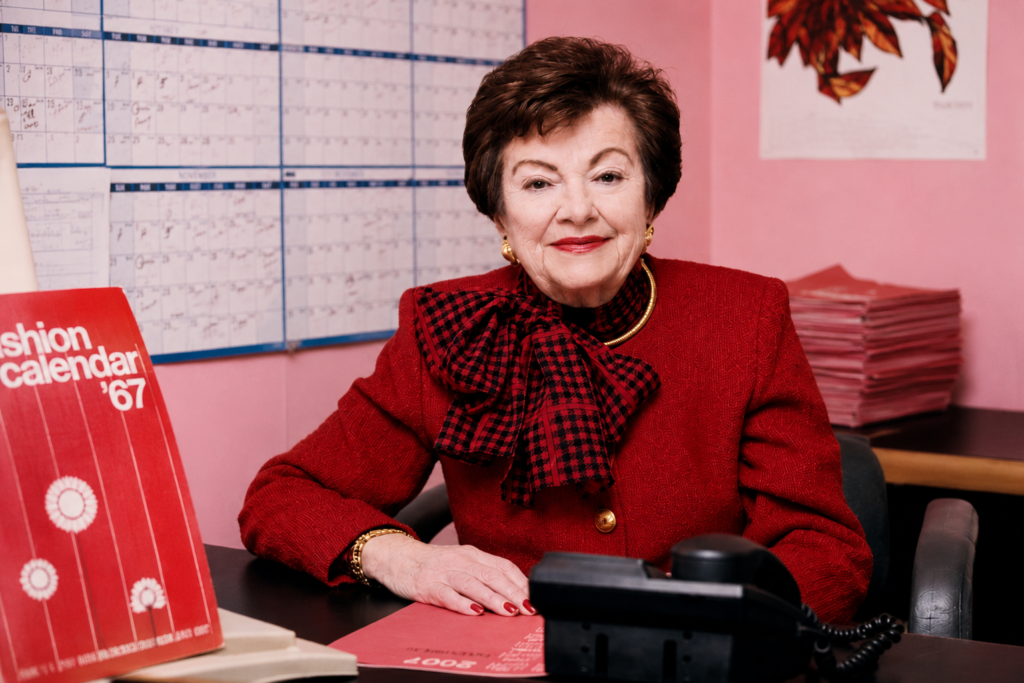
In the 1940s, New York’s fashion industry had a surprisingly ordinary problem: Designers kept scheduling shows at the same time.
Editors missed collections.
Buyers couldn’t be in two places at once.
Everyone was talented but no one was coordinated.
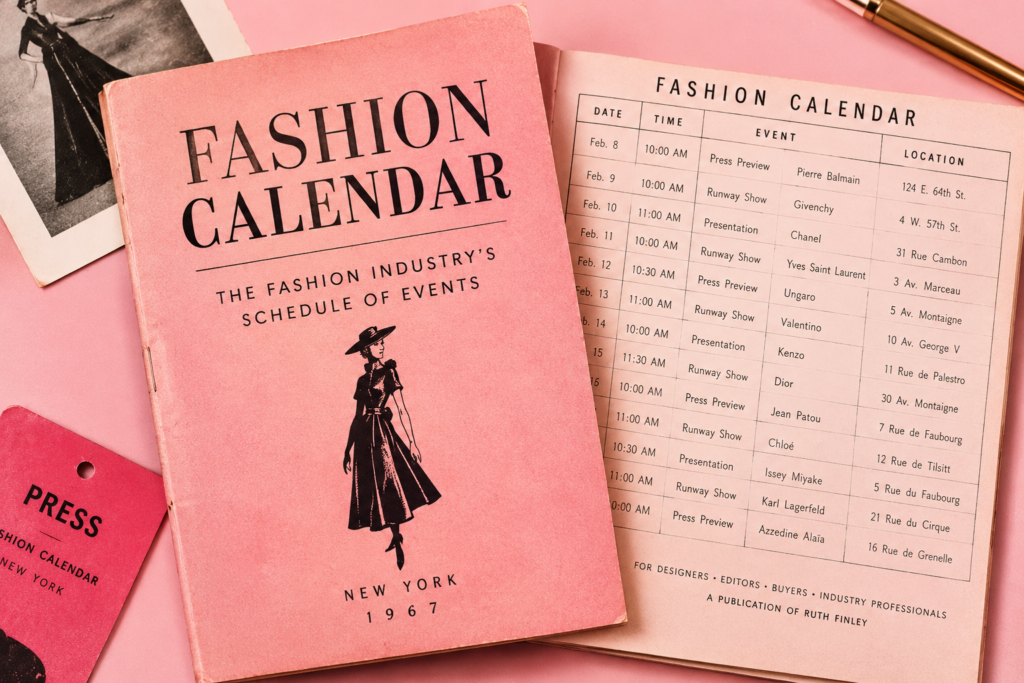
So, Ruth began jotting down all the fashion events happening around the city.
Dates. Times. Addresses.
She then printed it on a bright pink paper and titled it as “The Fashion Calendar”
And that little pink calendar eventually became the unofficial bible of the industry.
Her scheduling service helped designers, editors, buyers, and other fashion professionals keep track of events and avoid scheduling conflicts.
One woman. One calendar. And the beginning of a system that would quietly reshape New York fashion.
For more than six decades, Ruth became one of the industry’s most important behind-the-scenes figures.
Her calendar gave equal footing to unknown and legendary designers alike.
She acted as the industry’s air traffic controller, tracking hundreds of overlapping events during fashion week.
Later in 2014, the Council of Fashion Designers of America (CFDA) acquired the Fashion Calendar from Finley. Today, the calendar exists in digital form, while the Fashion Institute of Technology preserves and digitizes Finley’s extensive archive.
What Is a Fashion Calendar?
In the simplest terms: The fashion calendar is the industry’s timetable.
It helps coordinate when collections are designed, produced, shown, ordered, marketed, and eventually sold.
Because fashion isn’t created, photographed, manufactured, shipped, and placed in a store overnight.
There are designers.
Factories.
Buyers.
Models.
Stylists.
Editors.
Photographers.
Retailers.
Publicists.
And countless other people working behind the scenes.
Each one needs time to do their part.
And the calendar gives all of them a shared rhythm.
Think of it as a giant clock hanging above the fashion industry.
Everyone is working toward the same deadline.
How Fashion Turned Four Seasons Into a Year-Round Calendar
Take a normal year and divide it into four seasons, with each season lasting roughly for three months. So,
January, February, March becomes Spring
April, May, June becomes Summer
July, August, September becomes Autumn
October, November, December becomes Winter
But there’s one important thing to remember: seasons don’t happen at the same time everywhere in the world.
For example, when spring begins in March in the Northern Hemisphere, countries in the Southern Hemisphere are moving into autumn. Six months later, it switches. September brings spring to the Southern Hemisphere, while the Northern Hemisphere moves into autumn.
So when we talk about fashion seasons, we’re not simply talking about the weather outside. We’re talking about a global system that has to work across different parts of the world.
So, Designers grouped the seasons together to give fashion two main seasons unlike us:
Spring / Summer and Autumn / Winter.
Now since the seasons gets grouped, it creates empty spaces in between the major seasons
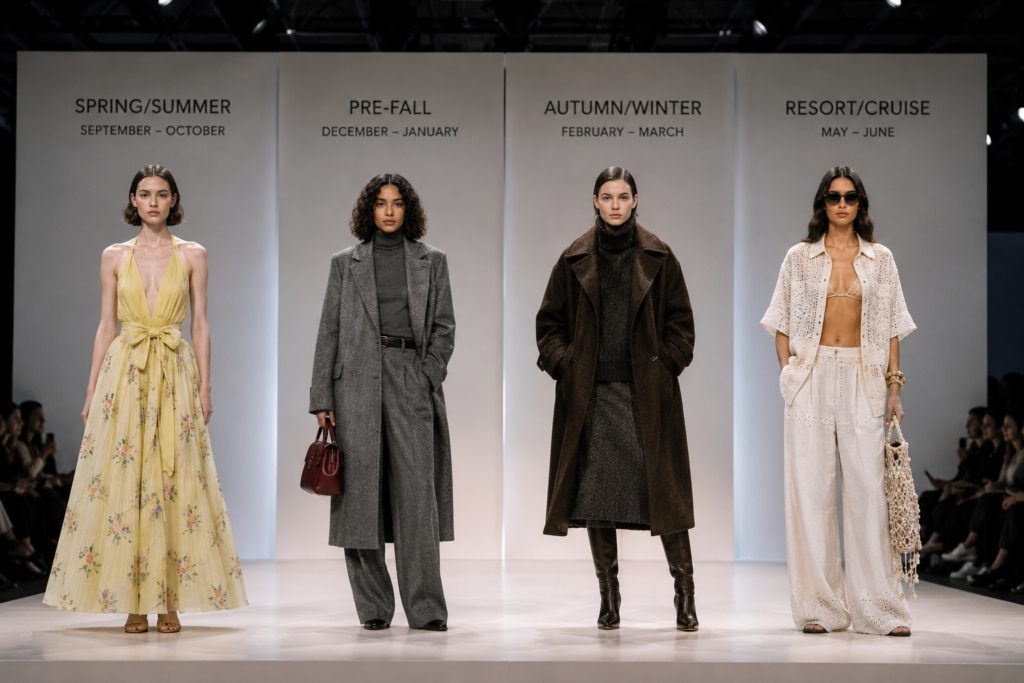
And to fill the gaps between these two major seasons, the fashion industry also developed collections like Resort/Cruise and Pre-Fall to fill the spaces between the major seasonal collections and give retailers more opportunities to sell new merchandise throughout the year.
And this is where fashion starts behaving differently from our normal calendar.
The Fashion Seasons
Now that we know fashion doesn’t follow the calendar hanging on our wall, let’s discuss the four collections you’ll hear about again and again:
Spring/Summer.
Autumn/Winter.
Resort/Cruise.
Pre-Fall.
Spring/Summer
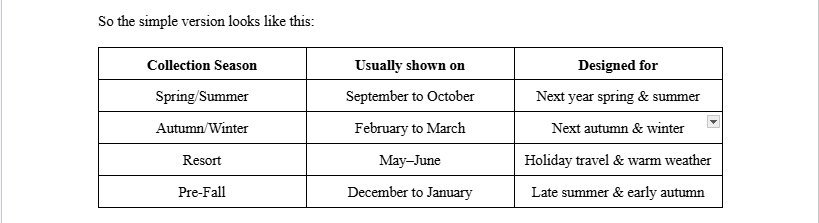
Spring/Summer collections are generally shown around September and October.
While many of us are pulling out our jackets and thinking about cooler weather, designers are already showing collections filled with dresses, lightweight fabrics, bright colours and warm-weather pieces for the following spring and summer.
After a collection is shown, buyers have to decide what they want to order. Manufacturers then need time to produce the garments. Retailers need to plan their inventory, campaigns and store displays.
By the time those clothes finally reach the racks, the season they were designed for has arrived.
Autumn/Winter
Autumn/Winter collections are generally shown around February and March, months before most customers are thinking about coats, knitwear or winter boots. The collections are designed for the following autumn and winter. You’ll see heavier fabrics, tailoring, outerwear, knitwear, boots and deeper seasonal palettes begin to appear on the runway.
Resort / Cruise
Resort collections are generally shown around May and June, although the exact timing can vary between brands and markets. It was originally associated with clothing for wealthy customers travelling to warm destinations during the winter, Resort has evolved into something much bigger.
Think: Holiday dressing, Swimwear, Lightweight layers, Easy dresses, Vacation pieces, Clothes designed for warm-weather escapes.
And because people travel at different times of the year, Resort doesn’t fit neatly into one traditional season. It fills a space and gives retailers something new to offer customers between the major seasonal drops.
Pre-Fall
Pre-fall is usually presented around December and January, Pre-Fall sits between the Spring/Summer and Autumn/Winter cycles. Think of it as the transitional collection.
The clothes aren’t quite summer or quite winter.
Instead, they are designed around the period when one season starts giving way to another, particularly late summer and early autumn. You might see lightweight knitwear, jackets that can be layered, longer skirts, transitional dresses, trousers and pieces that can move between warmer and cooler weather.
And there’s another reason Pre-Fall matters.
Unlike the major runway seasons, Pre-Fall collections are often more commercially focused. They give retailers a steady stream of new merchandise and give customers something fresh to buy while they wait for the next major seasonal collection.
And now you might be wondering: Why does everything happen so early?
Because fashion always lives six to twelve months ahead.
It is an enormous chain of decisions.
An idea becomes a sketch.
A sketch becomes a sample.
A sample becomes a collection.
Manufacturers need time to produce it.
Magazines need time to photograph and publish it.
Buyers need time to decide what they want.
Retailers need time to plan their stores.
And only after all of that does your favourite little black dress finally make its way to you.
The runway isn’t predicting tomorrow. It’s preparing an entire industry for a season that hasn’t arrived yet.
Think of it like one giant group project with designers, models, buyers, manufacturers, editors, stylists, photographers, retailers and countless others who are all trying to complete their part before the same deadline.
And that brings us to another important part of the fashion calendar: the cities that sit at the centre of this conversation.
The Big Four
Every year, the traditional international womenswear fashion-week circuit follows a familiar journey:
New York.
London.
Milan.
Paris.
Together, they’re traditionally known as the Big Four.
Each city has developed its own fashion language.
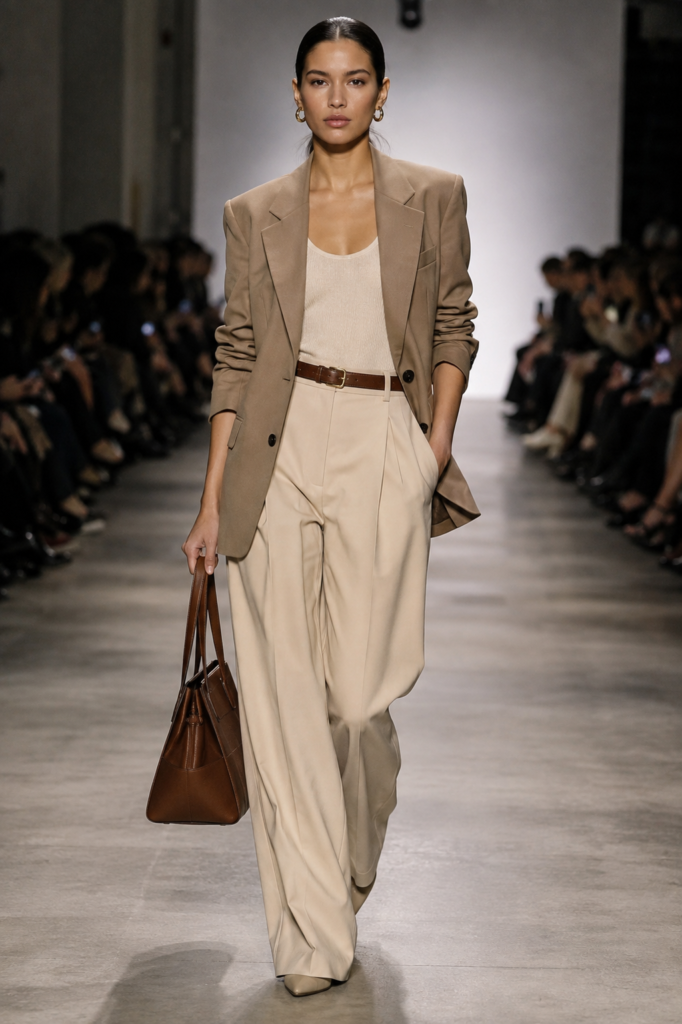
New York asks: Will people actually wear this?
Its fashion has often been associated with practicality, commercial appeal, and clothing rooted in everyday life.
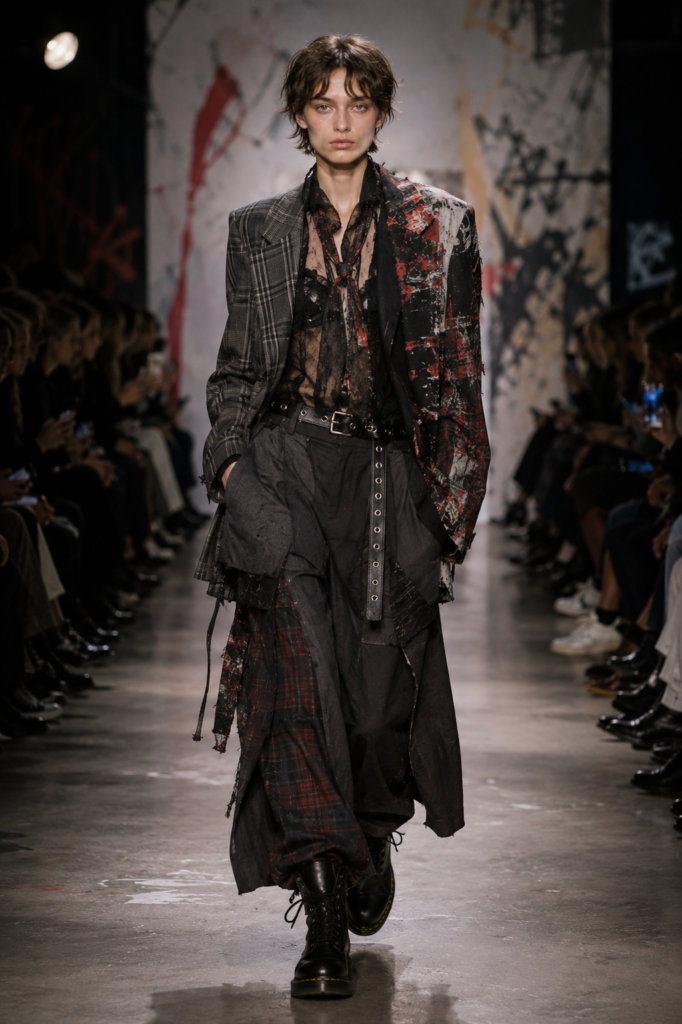
London questions: What if fashion broke every rule?
It indulges in experimentation, rebellion, individuality, and young designers taking risks.
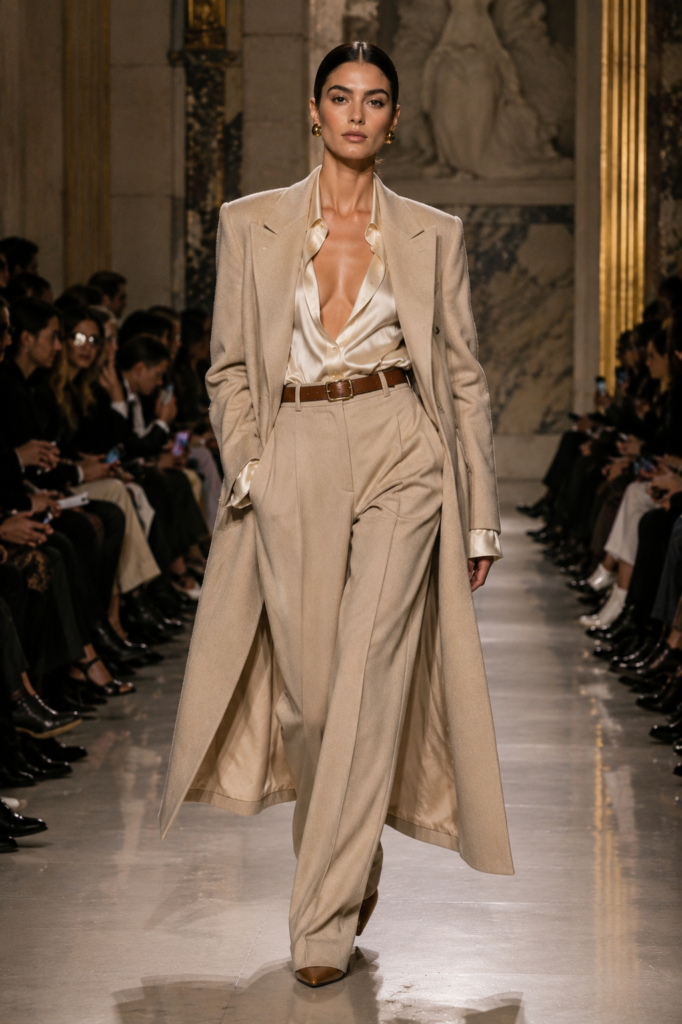
Milan believes clothing should feel like craftsmanship.
It is closely associated with craftsmanship, tailoring, luxury materials, and a deep tradition of Italian design from generations of family run ateliers.
And Paris?
Paris treats fashion like art.
It is the historic home of haute couture, garments that take hundreds of hours to create by hand.
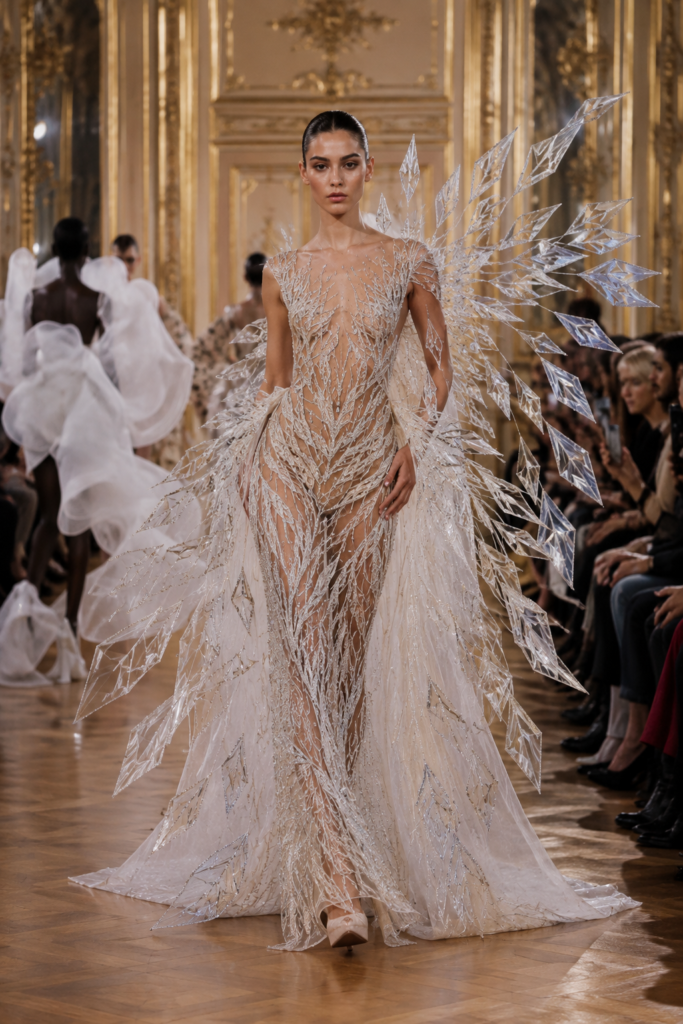
Four cities. Four personalities. One global conversation.
And, of course, these aren’t the only cities shaping fashion anymore. Tokyo, Seoul, Copenhagen, Shanghai and many others have become important parts of the global fashion conversation too.
But these Big Four still form the traditional centre of the international fashion-week calendar.
Fashion Also Has a New Clock Now
The traditional fashion calendar is still an important backbone of the industry but fashion no longer moves entirely according to it.
Fast fashion can react to trends at remarkable speed.
Social media can turn an unknown garment into a global phenomenon overnight.
Celebrity appearances can send a piece of clothing viral before a traditional fashion magazine has even photographed it.
Streetwear brands can release products through drops rather than traditional seasonal collections.
And direct-to-consumer brands can communicate with customers without waiting for the traditional retail cycle.
So, Why Exactly Does the Fashion Calendar Matter?
Because designers still take decisions based on this calendar.
That blazer trending on Pinterest?
It was designed months ago.
The colours you’re seeing everywhere this winter?
Someone approved them over a year earlier.
Even fast fashion often reacts to ideas that have already travelled through the larger fashion system.
The clothes arrive later but the ideas have to arrive first.
And that’s what fascinated me most about Ruth Finley’s story.
She didn’t just schedule fashion shows.
She helped create the rhythm that allowed an entire industry to work together without constantly running into one another’s timelines.
And maybe that’s the first lesson of fashion.
You don’t always need to create something new to change an industry. Sometimes, you just need to bring order to the chaos.
Like Ruth Finley did with her bright pink calendar.
Next time you see a runway show and wonder why someone is showing winter coats when it’s barely autumn, remember:
Fashion is always preparing for what comes next.
Previous Read: BTS Grammy Boycott: Why They’re Skipping the 2027 Awards

You May Also Like

The Year of Celebrating the Quotidian

Building Bridges Through Culture: A message from our Founder