
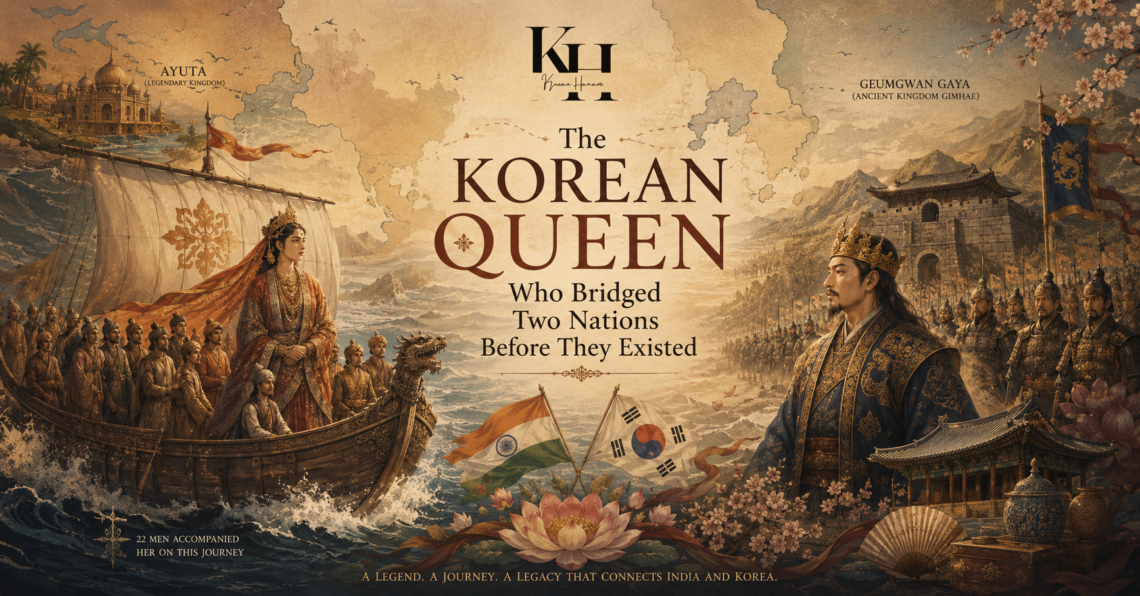
The Princess Who Left Home and Became Korea’s Most Beloved Queen
The Legend That Became a Living Bridge Between Two Nations
What if one of the oldest connections between India and Korea wasn’t written in a treaty, but remembered through a story?
For centuries, a remarkable legend has quietly linked the two countries across oceans and generations. It is the story of a sixteen-year-old princess, a king who believed heaven had already chosen his bride, and a journey that may have changed the lives of millions.
Whether every detail belongs to history remains open to debate. Yet the impact of the story is undeniably real.
A Princess Called by Destiny
According to the 13th-century Korean chronicle Samguk Yusa, a sixteen-year-old princess named Heo Hwang-ok left a distant kingdom called Ayuta in 48 CE after her parents received a divine dream. The dream revealed that heaven had chosen her to marry King Kim Suro, the founder of the ancient Korean kingdom of Geumgwan Gaya.
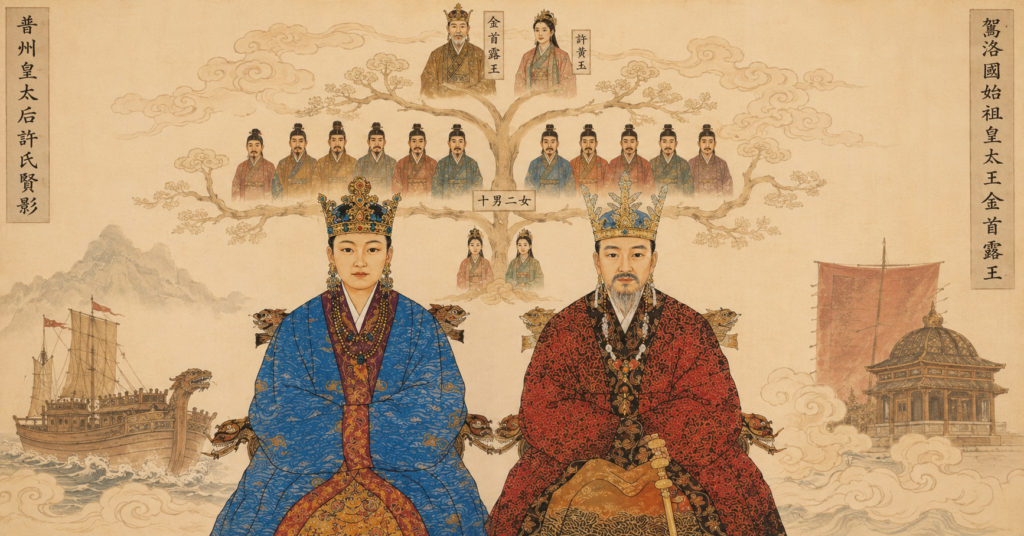
Across the sea, the legend says, King Suro had received a similar revelation. Believing that heaven had already chosen his future queen, he refused to marry until she arrived.
So, the young princess boarded a ship and sailed across the ocean, leaving behind everything she had ever known.
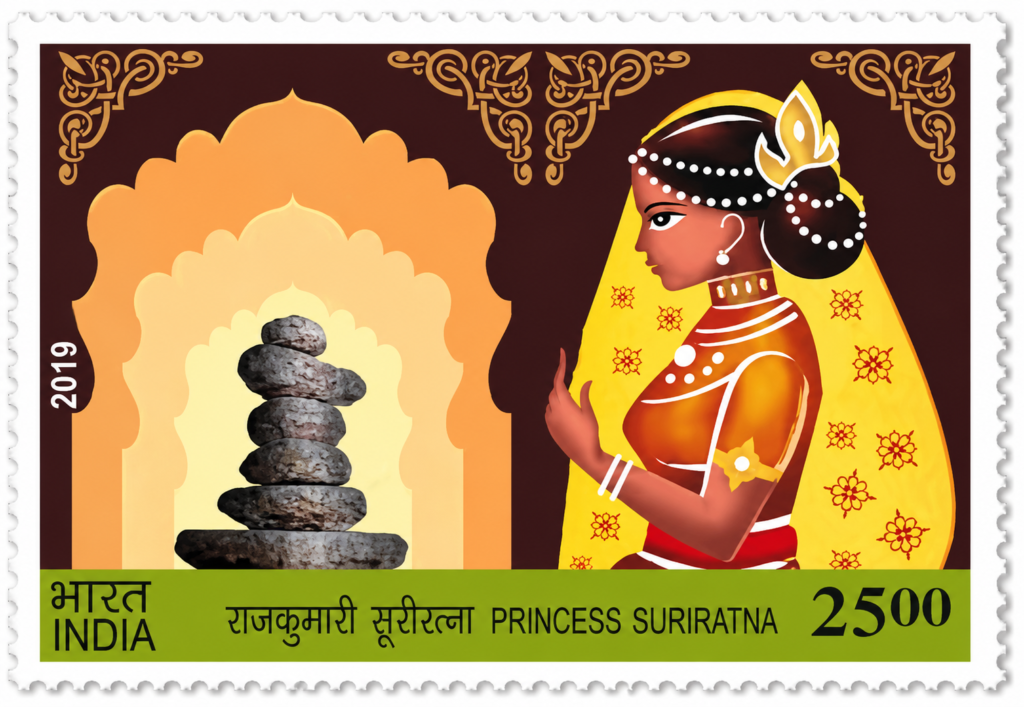
According to later traditions, she did not travel alone. Her attendants accompanied her with gifts, cultural treasures, and stones believed to have calmed the rough seas during the long voyage. Some of those stones are still preserved in Gimhae today as part of the enduring legend.
Whether these details preserve historical memories or represent symbolic additions remains uncertain. But together, they tell a story much larger than a royal marriage. They remind us that the distance between people, cultures, and ideas can sometimes be bridged by creating a shared cultural ground.
The Mystery of Ayuta
Where exactly did Queen Heo come from?
That question has fascinated historians, archaeologists, and cultural scholars for decades.
According to Samguk Yusa, Queen Heo came from a kingdom called Ayuta. But where that kingdom was located remains one of the greatest mysteries surrounding her story.
The most well-known theory identifies Ayuta with Ayodhya in northern India. Supporters point to the similarity between the names, the long-standing tradition preserved in both countries, and the modern cultural ties that have grown around the legend.
Others, however, remain unconvinced.
Some historians argue that Ayuta may have referred to Ayutthaya in present-day Thailand or another ancient maritime kingdom in Southeast Asia, suggesting the name could have changed over centuries through translation and oral tradition.
Another fascinating theory comes from scholars in Tamil Nadu, who propose that Queen Heo may have originated from the ancient Tamil kingdoms of southern India rather than northern India. They point to historical maritime trade routes between the Tamil coast and the Korean Peninsula, as well as linguistic similarities and cultural exchanges that existed across the Indian Ocean, arguing that these connections deserve greater attention.
Despite these competing theories, no definitive archaeological evidence has identified the true location of Ayuta or confirmed Queen Heo’s historical origins.
Because of this uncertainty, many historians view Queen Heo’s story as a legendary or semi-legendary tradition rather than a fully verifiable historical account. Others believe the legend may preserve the memory of a real royal marriage whose details evolved over centuries.
Yet perhaps the most remarkable question is no longer where Queen Heo came from.
It is why, after nearly two thousand years, her story continues to inspire research, debate, pilgrimages, and spark a lasting friendship between India and Korea.
Did You Know?
Queen Heo Hwang-ok’s story is recorded in the 13th-century Korean chronicle Samguk Yusa, one of Korea’s most important collections of legends, historical traditions, and Buddhist narratives. While historians continue to debate which parts of the story are historical and which belong to legend, the account remains one of the best-known origin stories in Korean cultural history.
A Family That Lives On
According to Korean tradition, Queen Heo and King Suro enjoyed a prosperous marriage and had twelve children: ten sons and two daughters.
Legend says that Queen Heo was saddened by the thought that none of her children would carry her maiden name. In an extraordinary decision for the time, King Suro allowed two of their sons to inherit their mother’s surname, Heo, rather than the royal surname, Kim. Their descendants would go on to establish the Gimhae Heo clan, while their brothers continued the Gimhae Kim lineage.
Today, members of the Gimhae Kim, Gimhae Heo, and related clans trace their ancestry to King Suro and Queen Heo through traditional Korean genealogies.
Taken together, these clans are believed to include between eight and ten million people, roughly 15–20% of South Korea’s population, depending on how the genealogical records are counted.
Whether every branch of those family trees can historically be verified remains a subject of debate among historians.
What is truly remarkable, however, is that millions of people continue to cherish the belief that they are descendants of the same queen whose legendary journey began across the sea nearly two thousand years ago.
When Legend Shapes Reality
History has not reached a final verdict on Queen Heo.
People, however, have continued to build real relationships around her story.
In 2000, Ayodhya and Gimhae signed an agreement to become sister cities, recognizing the cultural connection preserved through the legend.
A year later, more than one hundred historians, government representatives, and dignitaries, including the North Korean ambassador to India, gathered on the banks of the Sarayu River in Ayodhya to unveil a memorial dedicated to Queen Heo Hwang-ok.
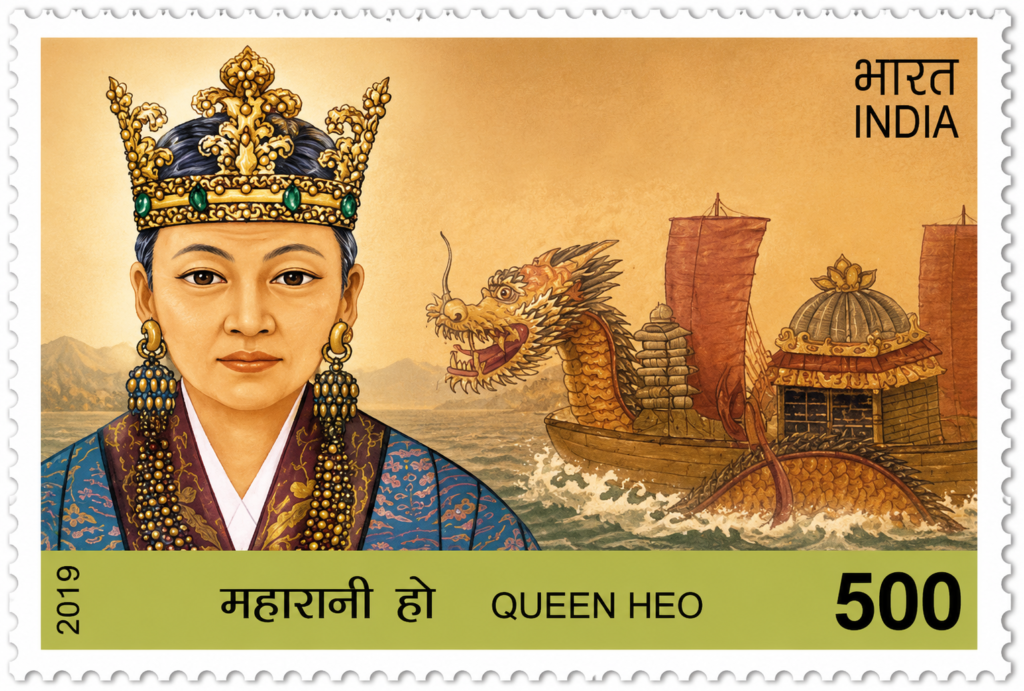
Every year, Korean visitors, many of whom believe they belong to the queen’s lineage, travel to Ayodhya to pay tribute to the woman they consider an ancestor.
In 2016, the South Korean government proposed expanding the memorial in partnership with the Uttar Pradesh government, further strengthening the cultural ties inspired by the centuries-old story.
As Professor Kim Do-young, a Korean studies scholar, has observed, whether Queen Heo’s story is history or legend, it has helped reduce the emotional distance between India and Korea by creating a shared cultural memory. In many ways, the legend has become a foundation for deeper friendship between the two nations.
Queen Heo’s Legacy in Popular Culture
Even after nearly two thousand years, Queen Heo’s story continues to inspire not only historical research but also modern popular culture. In 2010, her story reached television audiences through the historical drama Kim Su-ro, The Iron King, introducing many viewers to the legendary queen and the ancient kingdom of Gaya. Her story has also inspired discussions about books, exhibitions, and cultural collaborations celebrating the historical ties between India and Korea.
The cultural connection has continued to grow in recent years. In 2018, South Korea’s First Lady Kim Jung-sook visited Ayodhya and participated in ceremonies related to the expansion of Queen Heo’s memorial, further highlighting the enduring significance of the legend in diplomatic and cultural relations.
More Than History
Historians will continue searching for evidence.
Archaeologists will continue asking questions.
And scholars will continue debating the evidence of the mysterious kingdom.
Yet every year, people will continue crossing oceans to celebrate her existence.
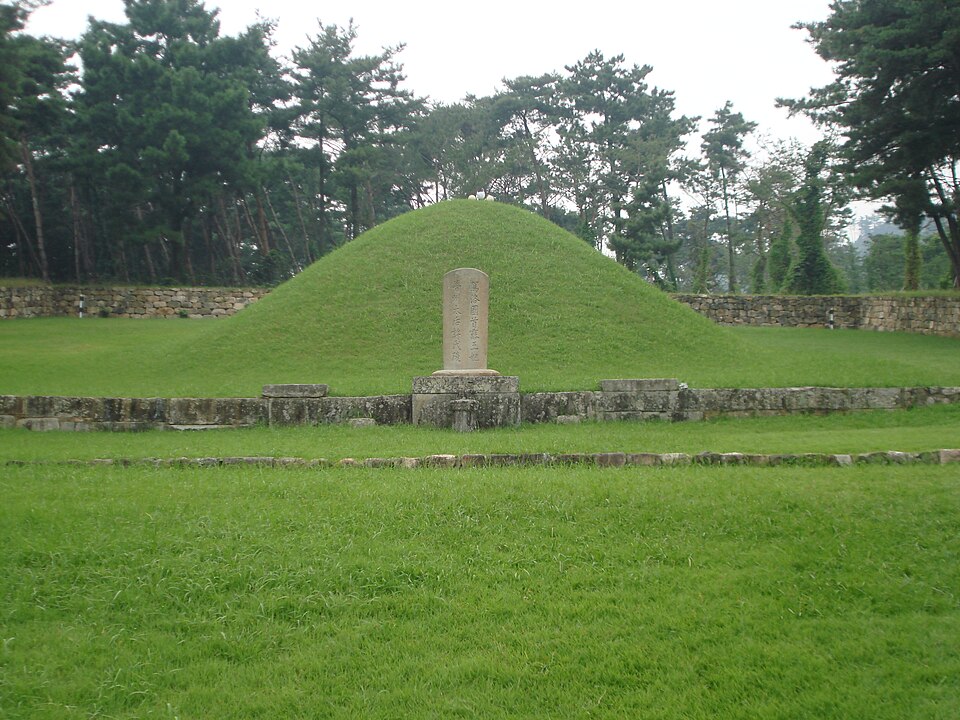
They will stand before a memorial on the banks of the Sarayu River, visit the royal tomb in Gimhae, and celebrate a story that has outlived kingdoms, borders, and even certainty itself.
Because nearly two thousand years after a young princess is said to have sailed toward an unknown land, her story continues to do something remarkable.
It reminds two nations that sometimes the strongest bridges are not built from stone or steel.
They are built from the stories people choose to carry across generations.
Continue Reading: The Hidden Psychology Behind Grieving Fictional K-Drama Characters


You May Also Like

Makgeolli 막걸리: A Pot Full of Clouds | All about Makgeolli
Top 10 Shocking Facts About South Korea That Will Leave You Open Mouthed