A Korean Word That Transcends Culture & Time
Grief has been stitched into every life on this planet.
Different languages describe it in different ways, but sometimes I wonder if grief connects us even more than love ever does. It is one of the few experiences that quietly reminds us that, despite our different histories and cultures, we are all human at the end of the day.
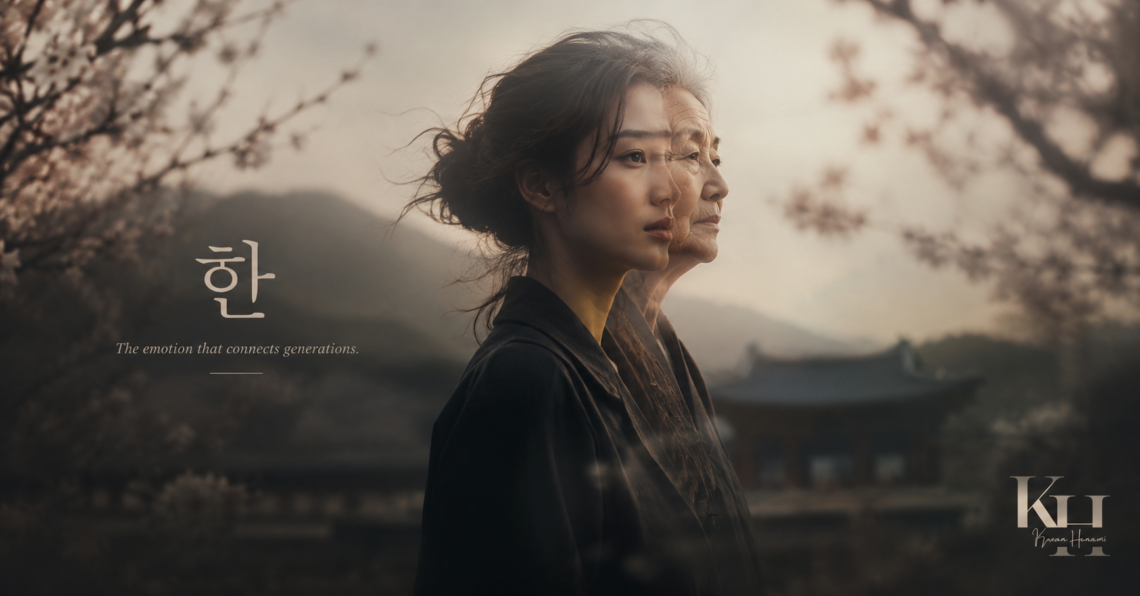
The internet will tell you that han (한) is a notoriously difficult Korean word to translate into English.
Maybe that’s because some feelings simply refuse to be confined to a dictionary.
Instead, they seep into ordinary moments, becoming part of how we carry ourselves through the world.
Han (한) isn’t simply sadness.
One way to understand it is as the feeling that lingers after grief has changed shape. The memory that still visits, even after life has moved forward. The quiet determination to keep showing up without pretending the hurt never happened. A grief that slowly learns how to coexist with hope.
I was talking to a friend last month, and they said something that’s stayed with me ever since.
“Everyone is moving toward something they hope for.”
The more I thought about it, the more it reminded me of han (한). Strip away our jobs, our titles, and our fears, and perhaps what remains is the quiet hope that tomorrow will be kinder than today. And on the days when the sun refuses to show up, we borrow its warmth from someone we love, or become that warmth for someone else, often without realizing that we’ve brightened a corner of our own lives too.
Historically, han (한) has often been associated with the pain left behind by war, occupation, separation, and generations of hardship. But like every living being, its meaning continues to evolve.
For many young Koreans today, han (한) can also echo the weight of modern life: the pressure to succeed, uncertainty about the future, and the loneliness that sometimes accompanies both.
You can find traces of han (한) in the family stories passed between generations, and even in the restrained emotional expression that quietly shapes many Korean dramas, films, and novels. Rather than offering easy resolutions, these stories invite us to sit with complicated emotions. They don’t promise that life is fair. They reveal the quiet strength of people who continue moving forward despite it.
And maybe that’s why Korean stories stay with us long after the credits roll.
Not only because they are emotionally honest.
But because they quietly remind us of the strength hidden within ourselves.
Understanding han (한) isn’t just about understanding Korea. It’s about discovering how another culture has found words for emotions many of us have carried all along.
And perhaps that’s the true beauty of exploring cross-cultural connections.
Every culture has its own language, traditions, and history. Yet they all understand the same quiet truth that: Not every season asks us to bloom. Some simply ask us to grow roots.


You May Also Like

Top 5 Places To Visit In South Korea | A Tourist Guide

The National Dish of South Korea and its Significance : Kimchi